“Gold is money. Everything else is credit.”
— J.P. Morgan
Gold has long occupied a unique position in financial history, sitting at the intersection of economics, politics and human psychology. For retail investors and traders, understanding why gold continues to matter, particularly during periods of uncertainty, offers valuable insight into how markets behave when confidence in traditional systems begins to erode.
An Introduction to Gold as an Investment
Investing in gold involves acquiring exposure to the metal as a financial asset rather than for consumption or industrial use. This exposure can be achieved through physical ownership, such as coins or bullion, or through financial instruments including exchange‑traded funds and derivatives. Unlike shares or bonds, gold does not generate income; its value lies instead in scarcity, durability, and the collective belief that it will retain worth over time (Wikipedia, 2026a). This characteristic makes gold fundamentally different from most modern financial assets.
Gold as a Store of Value
Gold’s reputation as a store of value is not a modern invention. For thousands of years, societies have used gold as money, a unit of account, and a means of preserving wealth. Its physical properties, non‑corrosive, scarce, and universally recognisable, have allowed it to maintain value across empires, wars and economic collapses. Long before complex financial markets existed, gold served as a stabilising anchor for economic systems, a role that continues to shape perceptions of its value today (Wikipedia, 2026b).
Bretton Woods and the Move Away from Gold
The modern monetary relationship with gold was formalised after the Second World War through the Bretton Woods Agreement of 1944. Under this system, the US dollar was pegged to gold, and other major currencies were pegged to the dollar, making gold the foundation of global financial stability. However, mounting inflationary pressures and persistent trade deficits in the United States led to the suspension of dollar‑gold convertibility in 1971. This marked the definitive shift from gold‑backed currencies to fiat money systems, fundamentally changing how money derives its value (World Gold Council, 2019).
Although gold no longer underpins global currencies, its importance tends to resurface during periods of economic or geopolitical stress. When confidence in financial institutions, sovereign debt, or fiat currencies weakens, investors often turn to gold as a perceived safe haven. Academic research consistently identifies gold as both a hedge against extreme market events and a diversifier within investment portfolios, particularly during crises when correlations between traditional assets increase (IMF, 2023).
Gold and Inflation Protection
Gold is also commonly associated with protection against inflation. While it does not always move in direct correlation with rising prices, historical evidence suggests that gold has preserved purchasing power over long periods of monetary expansion. The inflationary environment of the 1970s provides a notable example, during which gold prices rose sharply as confidence in paper currencies declined. In contrast to fiat money, which can be expanded through policy decisions, gold’s supply remains relatively fixed, reinforcing its appeal during inflationary cycles (The Royal Mint, n.d).

Central Banks, BRICS and the Return to Gold
In recent years, gold has regained strategic importance at the state level. Central banks, particularly in emerging economies, have increased gold holdings as part of efforts to diversify reserves away from the US dollar. Members of the BRICS bloc have been especially active in this regard, motivated by concerns over geopolitical risk, sanctions, and over‑reliance on dollar‑denominated systems. While this does not represent a return to a formal gold standard, it signals a renewed appreciation of gold as a neutral, non‑sovereign asset within the global monetary system (LSEG, 2025).
The dominance of the US dollar as the world’s primary reserve currency has remained largely intact since the end of Bretton Woods. However, growing gold accumulation by central banks and discussions around alternative settlement systems suggest gradual shifts in the international financial architecture. Should confidence in the dollar diminish, gold may continue to benefit as a hedge against currency risk and geopolitical fragmentation. This does not imply the imminent collapse of the dollar, but rather a slow rebalancing in which gold reasserts its relevance alongside fiat systems (WisdomTree, 2025).
For retail investors, gold offers more than price speculation. Its long history provides a lens through which to understand how markets respond to uncertainty, inflation and institutional stress. While banks, hedge funds and central institutions possess sophisticated tools to manage risk, gold remains one of the few assets that operates outside these structures. My interest in gold forms part of a wider inquiry into why retail investors so often bear the greatest losses during periods of upheaval, while institutions adapt and endure. Understanding gold is therefore not just about the metal itself, but about understanding the deeper mechanics of power and resilience in financial markets.
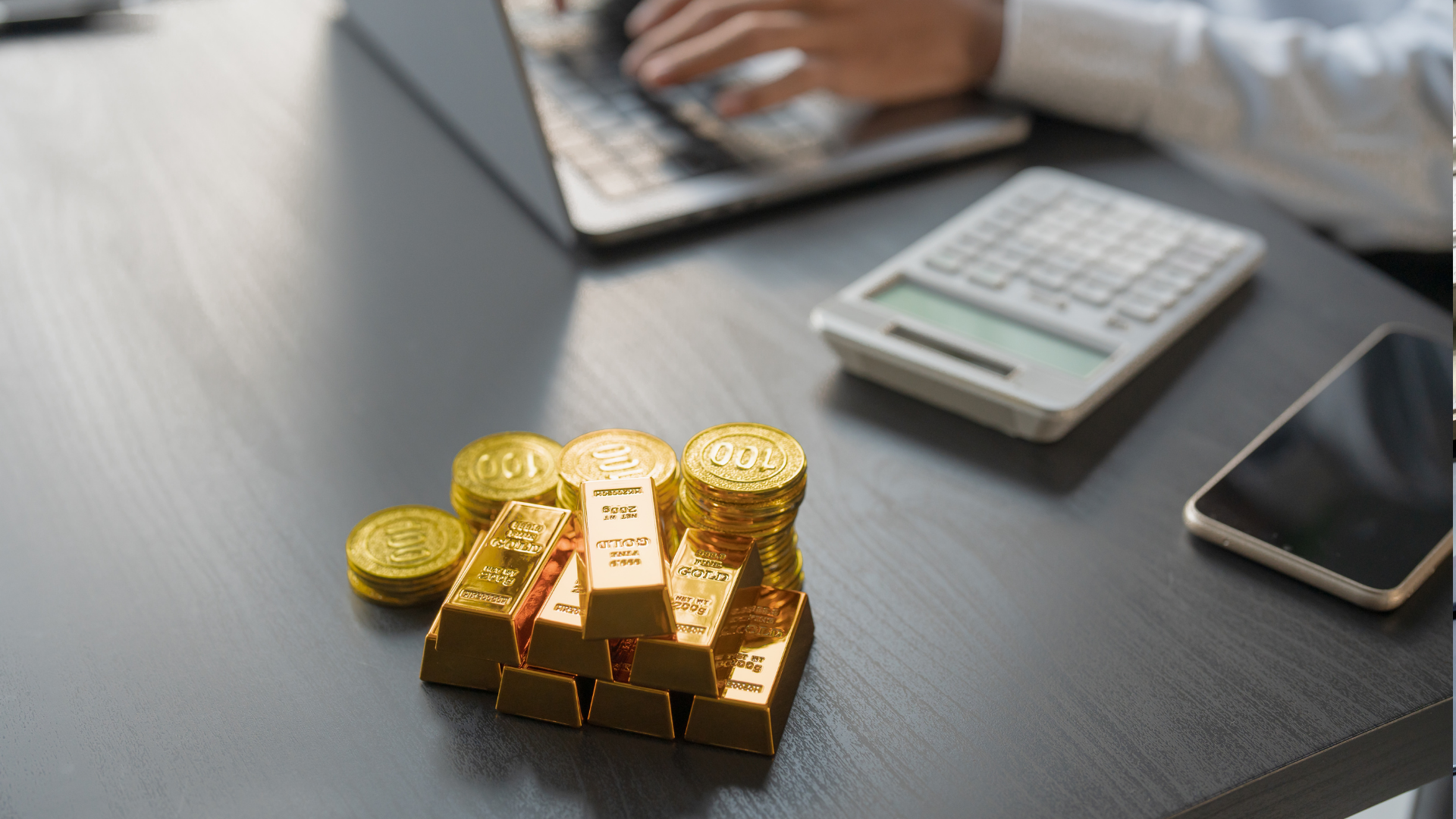
Finding a Reputable Bullion Dealer
For readers considering physical gold, choosing a reputable bullion dealer is critical. Unlike financial instruments held through regulated intermediaries, physical gold transactions rely heavily on trust, transparency, and regulatory compliance. Prospective buyers should look for dealers with a long trading history, clear pricing structures, robust buy‑back arrangements, and appropriate UK regulation, including adherence to anti‑money laundering requirements.
By way of personal context only, and not as an endorsement or paid advertisement, I use Atkinsons Bullion in the UK. (https://atkinsonsbullion.com/?srsltid=AfmBOopN8OvrTgv9v6Q93VQzjtUx48QKbtaIhvGoIShhFGsoZHNYgkrl)
Several years ago, before making any purchase, I conducted my own due diligence and comparative research across multiple providers. On that basis, Atkinsons was the firm I chose and have continued to use. My experience has been that their buy and sell processes are straightforward, efficient and professional, with the added reassurance of operating within a regulated UK framework. This is simply an account of my own decision‑making process and experience, and readers should always undertake their own independent research before engaging with any bullion dealer.
References
Wikipedia (2026) Gold as an investment. Available at: https://en.wikipedia.org/wiki/Gold_as_an_investment
World Gold Council (2019) Gold as a strategic asset. Available at: https://www.gold.org/goldhub/research/relevance-of-gold-as-a-strategic-asset
International Monetary Fund (2023) Gold’s lasting luster. Available at: https://www.imf.org/en/publications/fandd/issues/series/analytical-series/golds-lasting-luster
Royal Mint (nd) Five ways precious metals could act as hedge against inflation. Available at: https://www.royalmint.com/invest/discover/market-news/hedging-against-inflation/
LSEG (2025) Gold`s strategic revival in a fragmented world: A modern portfolio component. Available at: https://www.lseg.com/en/insights/ftse-russell/golds-strategic-revival-in-a-fragmented-world-a-modern-portfolio-component
WisdomTree (2025) Central banks, gold and the shifting foundation of reserves. Available at: https://www.wisdomtree.com/investments/blog/2025/09/23/central-banks-gold-and-the-shifting-foundation-of-reserves
Atkinsons Bullion. Available at: https://atkinsonsbullion.com/?srsltid=AfmBOopN8OvrTgv9v6Q93VQzjtUx48QKbtaIhvGoIShhFGsoZHNYgkrl
“Gold is money. Everything else is credit.”
— J.P. Morgan Available at: https://www.investmentoffice.com/Observations/Macro_Observations/Gold_Is_Money_Everything_Else_Is_credit.html